Financial Planning Built Around the Life You Want
Goldstone’s experienced financial advisors help you plan confidently for retirement and beyond.
Start Your Financial Plan Today
Financial Planning Built Around the Life You Want
Goldstone’s experienced financial advisors help you plan confidently for retirement and beyond.
Start Your Financial Plan Today Financial Planning Built Around the Life You Want
Goldstone’s experienced financial advisors help you plan confidently for retirement and beyond.
Start Your Financial Plan Today Appearances On:






















Build a Strong Financial Future with a Professional Financial Planner
Retirement is a time in life that many people look forward to. After decades of working hard, you finally get to enjoy the fruits of your labor and pursue your passions. However, in order to enjoy your retirement to the fullest, it’s important to have a solid financial plan in place. This can help ensure that you have enough money to support yourself and your loved ones throughout your golden years. The financial planners at Goldstone Financial Group will help you explore the ins and outs of financial planning for retirement, including retirement plans, investment strategies, asset management, and more.
Choosing the Right Financial Plan for Your Needs
One of the first steps in financial planning for retirement is choosing the right retirement plan. There are several options to choose from, including 401(k) plans, individual retirement accounts (IRAs), and Roth IRAs. Each plan has its own set of rules and requirements, so it’s important to do your research and choose the plan that best fits your needs.
A 401(k) plan is an employer-sponsored investment plan that allows you to contribute a portion of your pre-tax income to the plan. Many employers also offer matching contributions, which can help boost your savings even further. One advantage of a 401(k) plan is that your contributions are deducted from your income before taxes are taken out, which can help reduce your taxable income.
IRAs and Roth IRAs, on the other hand, are individual retirement accounts that you can open on your own. Traditional IRAs allow you to contribute pre-tax dollars, while Roth IRAs use after-tax dollars. Both types of accounts offer tax advantages, but the rules for withdrawals and contributions vary between the two.
Regardless of which financial plan you choose, it’s important to contribute as much as you can afford to. The more you save now, the more you’ll have in retirement.

Financial Planning: Finding the Right Balance
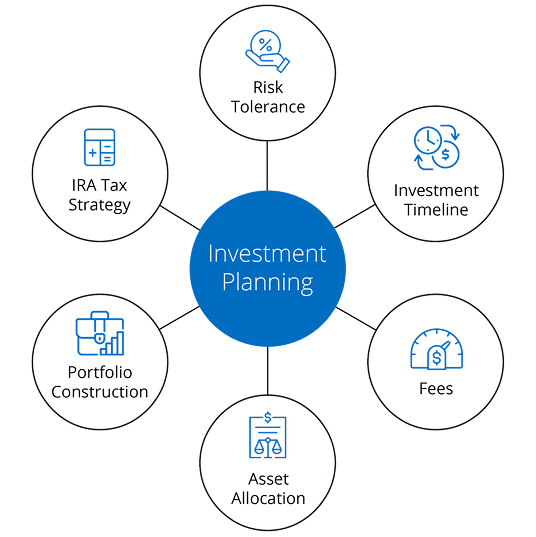
Another key aspect of financial planning is investment allocation. This refers to the process of dividing your portfolio among different asset classes to minimize risk and maximize returns. The right investment allocation mix will depend on your risk tolerance, financial goals, and time horizon.
Generally speaking, younger investors with a longer time horizon can afford to take on more risk, since they have more time to recover from any losses. Older investors, on the other hand, may want to focus on more conservative investments that offer stability and income.

Building a Diversified Financial Plan
Once you have a financial plan in place, the next step is to develop an investment strategy with a diversified portfolio. A good investment strategy should be based on your long-term goals, risk tolerance, and time horizon. It should also take into account the different asset classes and investment vehicles available.
Asset classes refer to different types of investments, such as stocks, bonds, real estate, and commodities. Each asset class has its own level of risk and return potential, so it’s important to diversify your portfolio across multiple asset classes.
Investments can be managed actively or passively. Active management involves selecting individual stocks and bonds based on market trends and other factors. Passive management, on the other hand, involves investing in index funds or other funds that track a particular market index. Both strategies have their pros and cons, so it’s important to weigh the risks and rewards of each.

Financial Planning That Balances Short-Term Needs and Long-Term Goals
In order to reach your financial goals, it’s important to balance your investments between the short and long-term. This can be done through short-term investments, such as money market funds or certificates of deposit (CDs), as they offer lower returns but also lower risk. On the other hand, long-term investments, such as stocks and mutual funds, offer higher returns but also higher risk.
The key is to find the right balance between the two types of investments. Once again, this will depend on your risk tolerance, financial goals, and time horizon. As a general rule of thumb, you may want to allocate a larger percentage of your portfolio to long-term investments if you have a longer time horizon, and a larger percentage to short-term investments if you are nearing retirement.
Trusted Financial Guidance
These days it can feel as if off-hand financial advice is around every corner. Whether it’s a friend, colleague, or the internet’s next financial “expert”, everyone seems to know what’s going to happen next in the financial world. The truth is nobody can predict the future. Without the combined knowledge of your unique financial situation and the dynamic tools, rules, and best practices of wealth planning, it’s impossible to set yourself up with protection for whatever the future could bring while optimizing upside potential.
Financial advisors, including those at Goldstone Financial Group, are bound by law to provide advice that serves your best interests, independent of any benefit to our firm.